Project Target
100% Remaining

67
Trees Planted out of 25,000 Trees
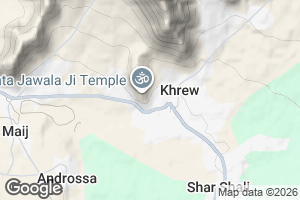
Project Location:
In FY 2026-27, we will plant 25,000 trees in this project. It will be implemented in Gossain Nar, Ladhoo and Narain Unit, Khonmoh in Pulwama & Srinagar Districts, Jammu & Kashmir, India.
Project Aim

Enhancement of
Biodiversity

Disaster Mitigation

Groundwater
Recharge

Increase in
Green Cover

Reduction in
Air Pollution

Improvement of
Wildlife Habitats

Improvement of
Hangul Habitat
SDG







Why Trees?
Amidst the breathtaking landscapes of Kashmir, a pressing ecological crisis continues to threaten the survival of the Kashmir Red Deer, also known as Hangul (Cervus hanglu hanglu). Once found in the thousands, the species has suffered a drastic decline over the last century and today remains critically endangered. While earlier estimates placed the population below 200, the latest 2025 census indicates a modest but encouraging recovery to approximately 323 individuals, largely confined to the Dachigam National Park and its surrounding landscape.
These elegant and elusive creatures, with their sleek russet coat and impressive antlers, are the only surviving Asiatic sub-species of the European red deer, making them an irreplaceable component of the region’s biodiversity. Despite recent gains, experts emphasise that the population remains highly vulnerable due to its limited range, low genetic diversity, and continued exposure to environmental pressures.
The degradation of natural habitat remains one of the primary drivers of the Hangul’s decline. Human activities such as urban expansion, infrastructure development, and resource extraction have fragmented the once-contiguous forest landscapes. In addition, livestock grazing, fuelwood collection, and disturbance within critical habitats have reduced the availability of browse-rich vegetation essential for the Hangul’s survival. Changes in land use and land cover across Kashmir have further altered ecological dynamics, impacting forest structure, water availability, and habitat connectivity. These transformations weaken the ecological stability of the landscape, making it increasingly difficult for species like the Hangul to sustain viable populations.
The Trees for Hanguls™ project, implemented near Khrew and Khonmoh Conservation Reserves in Kashmir, is designed as a targeted habitat restoration initiative to address these challenges. Through structured tree plantation, the project actively works to rebuild degraded habitats, improve vegetation quality, and restore ecological balance within the Hangul landscape. As the trees mature, they enhance carbon sequestration, improve soil and water conditions, and create a more stable and resource-rich environment for the species.
By introducing a mix of coniferous and broadleaf species aligned with the Hangul’s feeding behaviour, the project supports the availability of preferred browse and bark-rich vegetation. This directly contributes to improving habitat quality, which is critical for sustaining and expanding the population beyond its current restricted range.
While the recent increase in population to over 300 individuals offer a glimpse of hope, conservation experts stress that the Hangul’s survival still depends on sustained habitat protection, landscape-level restoration, and continued community participation.
The Trees for Hanguls™ project recognise that protecting a species is inseparable from restoring its ecosystem. Through this integrated approach, the initiative contributes to rebuilding a landscape one where wildlife can thrive alongside human communities, ensuring that the legacy of the Hangul endures for generations to come.
Tree Species
1. Cypress (Cupressus spp.)
Cypress is an evergreen conifer well-suited to the cold Himalayan conditions of Khonmoh Conservation Reserve landscape. It contributes to slope stability and strengthens forest structure in fragile mountain ecosystems.
It is important for:
Cypress enhances ecological stability in high-altitude forest systems critical for wildlife conservation.
2. Deodar Cedar (Cedrus deodara)
Deodar is a native and ecologically significant Himalayan species forming the backbone of montane forest ecosystems. It plays a vital role in maintaining habitat quality and ecological balance.
It contributes through:
Deodar forests are essential for maintaining ecological continuity in the Hangul landscape.
3. Kail Pine (Pinus wallichiana)
Kail Pine is a dominant Himalayan conifer species that contributes to forest regeneration and slope stabilization in mountainous regions.
It is valued for:
Kail Pine strengthens habitat connectivity and ecological resilience in degraded forest patches.
4. Apple (Malus domestica)
Apple is a key horticultural species in Kashmir’s temperate climate and contributes to both ecological and livelihood landscapes.
It supports:
Apple orchards also help maintain semi-natural landscapes that buffer wildlife habitats.
Pear is a temperate fruit tree well-adapted to the climatic conditions of the Kashmir valley. It integrates ecological restoration with local horticultural value.
It contributes through:
Pear trees help create productive buffer zones around conservation landscapes.
6. Apricot (Prunus armeniaca)
Apricot is a resilient fruit species widely cultivated in temperate Himalayan regions. It supports both ecological diversity and rural livelihoods.
It is important for:
Apricot strengthens the link between ecological restoration and rural economies.
7. Quince (Cydonia oblonga)
Quince is a lesser-known but ecologically valuable fruit species suited to temperate Himalayan conditions. It supports diversified plantation systems.
It contributes through:
Quince adds structural and functional diversity to restoration landscapes.
8. Horse Chestnut (Aesculus hippocastanum)
Horse Chestnut is a broadleaf species that supports soil stability and provides shade in montane ecosystems. It is valuable for mixed forest restoration.
It is important for:
Horse Chestnut strengthens ecological complexity in restored forest patches.
9. Peach (Prunus persica)
Peach is a temperate fruit tree that supports agroforestry systems in the Kashmir valley. It integrates well with both ecological and livelihood objectives.
It contributes through:
Peach strengthens the interface between conservation areas and rural livelihoods.
10. Kainth (Pyrus pyrifolia)
Kainth is a hardy wild pear species that naturally occurs in Himalayan ecosystems and supports ecological resilience in forest-edge zones.
It is valued for:
Kainth plays a key role in linking cultivated and wild ecosystems.
11. Plum (Prunus domestica)
Plum is a widely cultivated temperate fruit species that contributes to both ecological restoration and rural economies in Kashmir.
It supports:
Plum enhances agro-ecological balance while supporting livelihood stability.
Social impacts
The Trees for Hanguls™ project offers significant social benefits for local communities in Pulwama district and Srinagar district, where livelihoods are closely linked to forest ecosystems and natural resources. The project will generate employment opportunities for local communities through activities such as nursery development, sapling preparation, site preparation, plantation, watering, protection, and long-term maintenance. This creates short-term income while also building skills in conservation-based ecosystem restoration.
By actively involving local residents in habitat restoration for the Hangul, the initiative promotes a strong sense of stewardship and emotional connection with wildlife conservation. This participatory approach strengthens coexistence between people and wildlife while promoting long-term conservation ownership at the community level. The project also helps improve local environmental quality by restoring green cover, enhancing natural resource availability, and stabilizing ecological conditions that directly support rural well-being.
Ecological & Habitat Restoration Impacts
The Hangul (Cervus hanglu hanglu), the critically endangered Kashmir Red Deer, depends on the fragile forest ecosystems of the Dachigam National Park landscape and its surrounding corridors. Habitat fragmentation, degraded vegetation, and human disturbance have significantly reduced its ecological range. Through the plantation of native, browse-friendly, and habitat-supporting species, the project will help restore degraded forest patches and ecological corridors, vegetation diversity required for Hangul feeding and movement, soil stability and moisture retention in fragmented landscapes and connectivity between forested areas supporting wildlife dispersal
The introduction of coniferous and broadleaf species aligned with the Hangul’s browsing patterns will directly enhance food availability, supporting better nutrition and survival rates. Improved vegetation structure will also create protective cover, reduce stress and increase habitat suitability. Restored tree cover will further strengthen ecosystem functions such as improved groundwater recharge in upper catchment zones, reduced soil erosion on fragile Himalayan slopes and enhanced biodiversity, including birds, pollinators, and small mammals. Overall, the project contributes to rebuilding a functional and connected habitat landscape essential for the long-term survival of the Hangul population.
Economic Impact
Economically, the Trees for Hanguls™ project provides both immediate and long-term value for communities in conservation-linked landscapes of Kashmir.
In the short term, the project generates local employment through nursery operations, plantation activities, site maintenance, and protection measures. This creates income opportunities in rural areas where seasonal and forest-based livelihoods are often limited. In the long term, improved forest health strengthens ecosystem services that indirectly support local economies, including sustainable availability of fodder and fuelwood resources, improved water regulation supporting agriculture in downstream areas, reduced ecological degradation costs such as erosion and land instability.
Additionally, conservation-linked landscapes such as Khrew and Khonmoh have potential for eco-sensitive nature awareness and conservation education activities, which can contribute to knowledge-based local engagement and small-scale economic opportunities. By restoring habitat for the Hangul, the project also safeguards the ecological foundation that supports traditional rural livelihoods, ensuring long-term environmental stability in the region.
References
Social Impact of Growing Trees
Community Engagement
Tree planting initiatives often involve local communities, which can lead to greater community cohesion.
Ecological Education
Provides opportunities for community members, especially children, about the importance of environmental sustainability.
Urban Beautification
Trees contribute to the aesthetic enhancement of urban areas, making cities more pleasant and liveable.
Climate Resilience
By improving green cover, tree planting helps make communities more resilient against climate impacts like heatwaves.
Employment Creation
Planting trees creates employment for local community members like planting and maintenance, administrative roles, and more long-term jobs in management.
Wildlife Habitat
Trees provide critical habitats for various species of wildlife. Enhancing tree cover helps preserve biodiversity, which can be an ecological boon for local communities
Copyrights @ 2025 All rights reserved by Pangea EcoNetAssets Pvt Ltd.