
Views
1059
Introduction
Carbon markets are entering a decisive moment as Article 6 begins shaping countries to achieve their Nationally Determined Contributions (NDCs), creating a new layer of international carbon markets alongside existing voluntary and domestic schemes.
Article 6 is a framework that allows countries to cooperate on climate action by transferring carbon reductions across borders through mechanisms such as Article 6.2 (bilateral transfers of Internationally Transferred Mitigation Outcomes or ITMOs) and Article 6.4 (a UN-supervised global crediting mechanism), while requiring corresponding adjustments (CAs) to avoid double counting between buyer and seller inventories.
Figure 1 Addressing double counting
As Article 6 begins shaping how countries account for cross-border carbon transfers, its rules particularly corresponding adjustments are increasingly influencing expectations in the voluntary carbon market. Under the Article 6.2 guidance, host Parties may apply corresponding adjustments not only for transfers between countries but also when mitigation outcomes are authorised for use in voluntary markets, signalling a growing convergence between compliance and voluntary frameworks. This shift is significant because many governments are now establishing Article 6 strategies and national registries that shape how carbon credits, especially NbS credits, are authorised, tracked, and incorporated into national climate plans. Consequently, this evolution is particularly relevant for Nature-based Solutions (NbS) projects as recent developments show countries accelerating implementation with pilot agreements and registries, raising questions about how future NbS projects should integrate Article 6 authorisations into their planning, financing, and alignment with national climate agendas. This blog examines what these updates means for the VCM and compliance markets, how Article 6 and corresponding adjustments differ from traditional voluntary credits, the implications for upcoming NbS project design, and why aligning with Article 6 is becoming increasingly necessary as international cooperation deepens and carbon markets evolve.
COP30 delivered major advancements across carbon removals, international carbon markets, and nature-based climate action. Below are the key decisions and signals shaping the next phase of global climate cooperation.
Independent carbon markets historically evolved as private systems, but today they interact increasingly with regulated markets, including national Emissions Trading Systems (ETSs) and Carbon Offsetting and Reduction Scheme for International Aviation (CORSIA), reflecting a growing integration between voluntary and compliance regimes. As of 2025, over 30 countries have formally announced plans to use ITMOs, and 97 bilateral Article 6.2 agreements have already been signed between 59 countries, demonstrating how national governments (not private standards) are becoming the primary decision makers for authorising cross-border credit flows. Additionally, developers are preparing for Article 6.4, submitting 1,041 prior consideration applications (824 for PAs and 217 for PoAs), indicating a pipeline that could surpass traditional voluntary market supply.
Figure 2 Registered independent carbon crediting projects by region (left) and prior consideration notification submissions by region (right)
This evolving landscape makes the differences between voluntary credits and ITMOs increasingly clear. Voluntary credits count toward the host countrys NDC, while ITMOs require government approval, national tracking, and corresponding adjustments to be used internationally. Voluntary standards are already connecting to Article 6, with 58 projects under Gold Standard, Verra, and ART receiving Article 6 authorisations. At the same time, the VCM is under pressure to improve integrity, highlighted by a 56 percent drop in transactions in 2023. Yet demand could reach one billion credits by 2030, with a market value of USD 735 billion. This makes Article 6 alignment increasingly important for market confidence and long-term viability.
NbS are becoming central to national climate strategies, and Article 6 makes this connection even stronger. Countries now decide which NbS activities can be exported as carbon credits and which must stay within their NDCs. In 2025, 85 of 100 countries had Article 6 authorisation or tracking systems in place or under development, and 62 countries had already appointed authorities to approve transfers, showing that governments are becoming the main decision makers for cross-border NbS credit flows. At the same time, NbS represents one of the largest pools of future Paris-aligned credits: the voluntary market already contains over 11,606 NbS projects under independent standards, and issuances for removals reached 42 MtCO2e in 2024, while avoided-emission NbS credits declined, reflecting shifting preferences toward high-integrity removals.
For NbS developers, engaging early with host governments, understanding authorisation rules, and designing projects that can meet Article 6 requirements are no longer optional. Only 13 percent of countries currently have full authorisation and tracking systems, which creates short-term uncertainty, but the long-term opportunity is significant as Article 6-aligned credits are expected to carry higher integrity and potentially higher value. Recent data shows that AFOLU projects in some major markets now face the longest registration timelines worldwide, with 75% taking more than 1,689 days to register in India, compared to 623 days in the rest of Asia, and sectoral vulnerabilities rising as AFOLU accounts for 93% of global on-hold and 81% of rejected projects. These bottlenecks illustrate the operational pressures that Article 6 systems must overcome as demand grows. Yet the opportunity for developers remains significant as Article 6 aligned credits are expected to carry higher integrity, greater market confidence, and better access to premium buyers. In simple terms, NbS developers who prepare for Article 6 now will be better positioned to benefit from future demand and ensure their projects remain viable in a Paris-aligned carbon market.
The time for seeking global solutions is running out. We can find suitable solutions only if we act together and in agreement- Pope Francis, 266th Catholic Pope
COP30 has created strong momentum for Paris-aligned carbon markets, clearer Article 6 frameworks, and large-scale investment in high-integrity climate action. This brings the voluntary market to make more closer connection with government-driven accounting. For NbS developers, this shift means understanding host-country authorisation, corresponding adjustments, and emerging Article 6 pathways, as this is now essential for accessing future finance and maintaining integrity. At grow-trees.com, we see this transition as a critical opportunity to strengthen how NbS projects are designed and delivered, by aligning community-led restoration, robust MRV, and long-term ecological outcomes with national climate priorities. This is not only a requirement for the future of carbon markets, it is an opportunity to redefine their quality, purpose, and long-term contribution to climate and community outcomes.
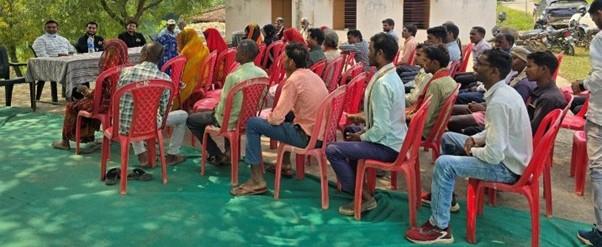
Figure 3 Grow-Trees team during a stakeholder consultation for its upcoming ARR project in India (VCS 5821)
Subscribe to our newsletter and recieve a selection of our cool articles every week.

The Importance of Trees: 6 Ways Trees Connect People, Nature, and Communities
Importance of Trees
Apr 13, 2026

Copyrights @ 2025 All rights reserved by Pangea EcoNetAssets Pvt Ltd.