
Views
840
Forest conservation does not begin with laws or statistics. It begins with noticing what forests quietly do for us every single day. Yet how often do we stop to notice? We celebrate tree-planting drives but rarely ask whether those saplings survive their first monsoon.
In India, forests are not distant green spaces. According to the India State of Forest Report (Forest Survey of India), forest and tree cover together account for just over 25% of the countrys geographical area, existing alongside villages, farms, highways, and wildlife corridors. These forests shape how rivers flow, how animals move, and how communities survive. When forests disappear, the loss is not abstract; it shows up in dry wells, damaged crops, rising temperatures, and rising conflict between people and wildlife. These are not future concerns they are already unfolding across forest-edge villages today.
To conserve forests is to protect this fragile balance. And the uncomfortable truth is, every tree lost shifts that balance against us.
Forest conservation refers to the protection, restoration, and responsible management of forests so they can continue supporting life ecologically, socially, and economically over time.
Beyond definitions, forest conservation is about restraint. It is about recognising limits and allowing ecosystems the time and space to recover. According to environmental accounting data published by the Ministry of Statistics and Programme Implementation (MoSPI), Government of India, forests provide measurable services such as carbon storage, water regulation, soil protection, and livelihood support benefits that decline rapidly when forest cover fragments.
The key objective is simple yet demanding: to ensure forests remain living, connected ecosystems rather than fragmented patches.
At Grow-Trees.com, this understanding is shaped by on-ground realities, not boardroom theories. Since our founding in 2010, we've planted more than 22 million trees across India, working directly with rural and tribal communities who understand forests not as concepts but as neighbours.
Through initiatives such as Trees for Elephants®, conservation efforts are focused in villages along the foothills of the Dalma Wildlife Sanctuary in East Singhbhum district, Jharkhand, a landscape where forests, agriculture, and elephant movement intersect every day.
Similarly, our Trees for Tigers® project in West Bengal addresses the critical need for forest connectivity in tiger corridors, while our Trees for Tribals® initiative in Kancheepuram district empowers indigenous communities through sustainable forest restoration.
We've learned that successful conservation happens when local communities become stakeholders rather than bystanders.
Forests are among nature's most effective climate regulators. They absorb carbon dioxide, moderate local temperatures, and reduce the intensity of floods, droughts, and heat waves.
The MoSPI Environmental Accounting on Forests highlights that conserved forests continue to moderate temperatures, reduce flood intensity, and buffer droughts without external intervention. Protecting forests, therefore, is not symbolic climate action it is long-term risk management.
Indias forests support biodiversity that depends on scale and continuity. According to ecological studies cited by the Forest Survey of India, species such as elephants, hornbills, and large carnivores require uninterrupted forest landscapes to survive.
When forests fragment, wildlife do not move closer to people by choice; habitats simply shrink around them. This is where policy and reality diverge. We draw boundaries on maps, but elephants don't recognise them.
In regions such as the Dalma Wildlife Sanctuary belt in East Singhbhum, Jharkhand, restoring local tree cover helps strengthen elephant habitats and maintain ecological continuity, reducing pressure on surrounding villages. Through our Trees for Elephants® project, we've worked with over 50 villages in this region, witnessing firsthand how restored forest corridors reduce crop raids and save lives both human and elephant.
Forests decide how rain behaves. According to the MoSPI forest ecosystem accounts, areas with healthy tree cover allow rainwater to infiltrate slowly, recharging aquifers and sustaining streams. Without forests, rainfall runs off exposed land, causing erosion, floods, and long-term soil degradation.
We've seen villages where hand pumps run dry by March because the surrounding hills were stripped bare decades ago. And we've seen others where restored forest cover has brought perennial water sources back to life within five years.
In forest-edge villages, conservation helps stabilise slopes, protect fertile topsoil, and support agriculture that depends on predictable water cycles.
For millions of rural and tribal households, forests are not an environmental ideal; they are a source of daily survival. According to the Government of Indias environmental-economic assessments, forests support livelihoods through non-timber forest produce, agroforestry, and conservation-linked employment.
When communities are involved in restoration and protection, conservation becomes sustainable rather than imposed. This is a non-negotiable, as conservation that ignores local livelihoods will always fail.
Forest conservation works best when people see value in keeping forests standing.
Indias development is accelerating through expanding infrastructure, cities, and industries. However, as highlighted in the India State of Forest Report, forests cannot regenerate at the pace at which they are cleared. This imbalance results in water stress, biodiversity loss, climate instability, and rising humanwildlife conflict.ear. Forests, however, cannot regenerate at the same pace at which they are cleared.
This imbalance creates long-term consequences such as water stress, climate instability, biodiversity loss, and rising humanwildlife conflict. And here's the uncomfortable truth: we're making choices today that our children will pay for tomorrow.
Forest conservation is not about opposing development. It is about ensuring development does not erode the very systems it depends on. It's about asking what kind of progress leaves us with less water, degraded soil, and forests that exist only in photographs?
Afforestation introduces tree cover on degraded or non-forest land, helping restore ecological functions where forests no longer exist.
At Grow-Trees.com, our afforestation projects prioritize native species selection based on site-specific soil and climate analysis, ensuring survival rates above 80%-well above industry averages.
Our Miyawaki Forest projects create dense, multi-layered urban forests on small plots of land, demonstrating how even compact spaces can support biodiversity when planted strategically.
Reforestation focuses on restoring forests in areas where they historically existed, rebuilding ecosystem integrity and improving landscape connectivity, as recommended by the Forest Survey of India.
Sometimes, the most effective action is simply to leave healthy forests undisturbed, allowing them to grow older, store more carbon, and support richer biodiversity. This method often gets overlooked because it requires patience, not performance metrics.
Responsible forest use ensures regeneration, biodiversity protection, and long-term productivity while meeting community needs.
Healthy forests require monitoring, protection from illegal activities, and intact wildlife corridors, especially in landscapes where human settlements and wildlife movement intersect. Our field teams conduct regular monitoring across project sites, documenting survival rates, biodiversity indicators, and community feedback to ensure accountability and continuous improvement.
Projects such as Trees for Elephants® focus on restoring native tree cover in humanelephant interface landscapes, particularly along the foothills of the Dalma Wildlife Sanctuary in East Singhbhum, Jharkhand, where forests play a crucial role in habitat continuity. What started as a tree-planting initiative has evolved into a comprehensive conservation model involving habitat restoration, community engagement, and conflict mitigation- proof that conservation must adapt to ground realities, not textbook ideals.
Agroforestry integrates trees with agriculture, improving soil health, diversifying income, and reducing pressure on natural forests.
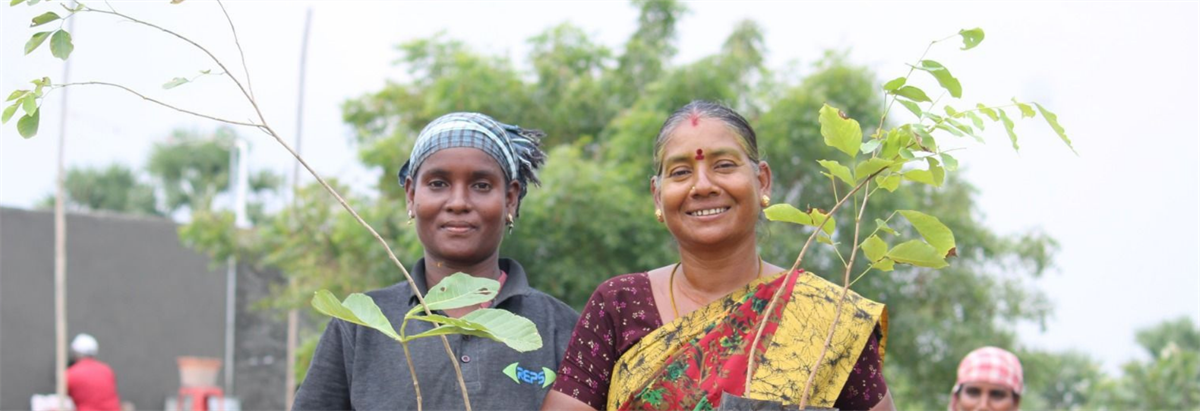
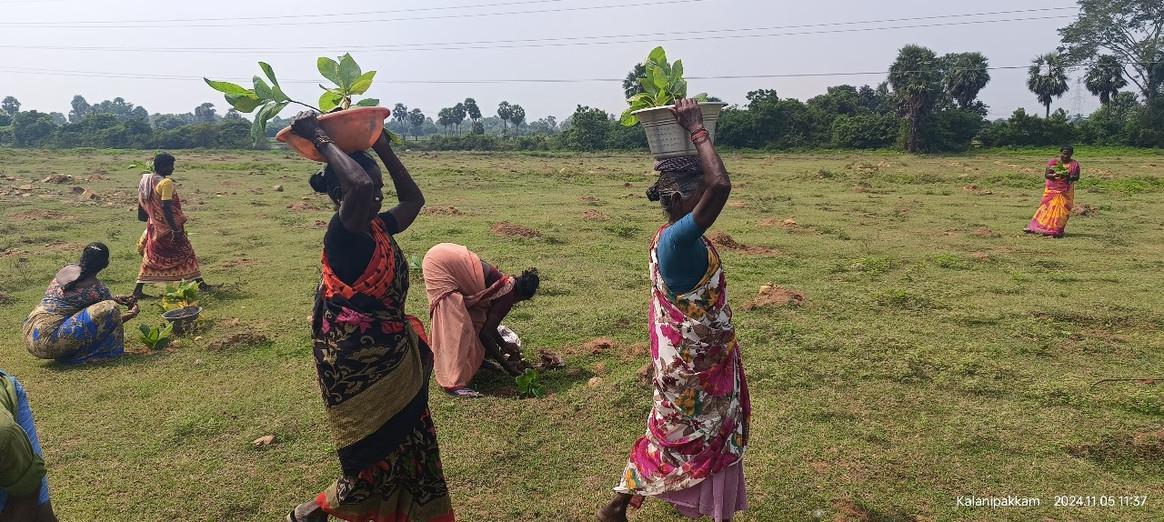
Social forestry creates green cover on community land while generating employment and fostering long-term stewardship at the local level. Through our Trees for Tribals® initiative in Visakhapatnam District and other tribal belts, we've supported indigenous communities in restoring forest cover on common lands, ensuring their traditional rights are respected while enhancing ecological security.
As development pressures increase, amendments continue to shape forest governance, making responsible, transparent conservation efforts increasingly important. Strong legislation matters, but enforcement matters more, and that's where citizen awareness and organisational accountability become crucial.
Forest conservation cannot rely on policy alone. It requires participation. Organisations and businesses play an important role by supporting restoration projects, strengthening community livelihoods, and committing to long-term ecological outcomes.
Grow-Trees.com enables this participation by connecting individuals and organisations to verified, on-the-ground conservation projects across India, ensuring transparency, community involvement, and sustained environmental impact.
Since 2010, we've partnered with over 150 corporations and thousands of individual donors, demonstrating that when conservation is transparent, accessible, and impact-driven, people invest in it. Every tree planted through our platform is monitored and reported on because accountability isn't optional; it's foundational.
Forest conservation means protecting and restoring forests so they can continue supporting wildlife, water systems, climate stability, and human livelihoods over the long term.
India's forests support biodiversity, regulate water cycles, protect soil, and reduce humanwildlife conflict. Their loss directly affects agriculture, climate resilience, and rural communities.
By restoring forest cover and maintaining wildlife corridors, animals such as elephants can move safely within their natural habitats instead of entering villages and farmlands.
Grow-Trees.com's initiatives are implemented in villages along the foothills of the Dalma Wildlife Sanctuary in East Singhbhum district, Jharkhand. To know more about the project, click on Trees for Elephants.
Projects prioritise native and indigenous tree species, as they are best suited to local ecosystems and wildlife needs.
Yes. Individuals and organisations can support verified tree plantation and forest restoration projects, helping fund long-term ecological and community outcomes.
Forest conservation is deeply personal, even when it does not feel that way. It is present in the water we drink, the food we grow, and the wildlife we hope future generations will still see.
In India, conserving forests is not about protecting something distant; it is about protecting what quietly sustains everyday life. It's about recognising that every choice where we source our products, which organisations we support, how we spend our weekends either protects forests or erodes them.
Every forest restored near the Dalma Wildlife Sanctuary, every corridor strengthened, and every community involved brings us closer to balance. And balance isn't a luxury. It's survival.
Because forests do not ask for much. Only the space to continue taking care of us. The question is, are we willing to give them that space?
Source-
Impact Grow-Trees.com https://www.grow-trees.com/blog-individual/1180/Impact-of-Grow-Treescom
Website- https://www.grow-trees.com/
Ministry of Statistics & Programme Implementation (MoSPI) https://new.mospi.gov.in/
India State of Forest Report (ISFR) - https://cjp.org.in/forest-conservation-amendment-act-2023-a-challenge-to-adivasi-land-rights-and-environmental-protections/#:~:text=Conclusion,%2C%20livelihood%20loss%2C%20and%20displacement.
Carbon Sequestration Estimates https://plantamilliontrees.org.in/
Wildlife Conservation Outcomes- https://timesofindia.indiatimes.com/
Subscribe to our newsletter and recieve a selection of our cool articles every week.
Copyrights @ 2025 All rights reserved by Pangea EcoNetAssets Pvt Ltd.