
Views
1240
There is something deeply satisfying about planting a tree. It feels simple. Almost small. Yet in a world facing rising temperatures, shrinking forests, and disappearing wildlife, that small act has become one of the most practical climate solutions available to us.
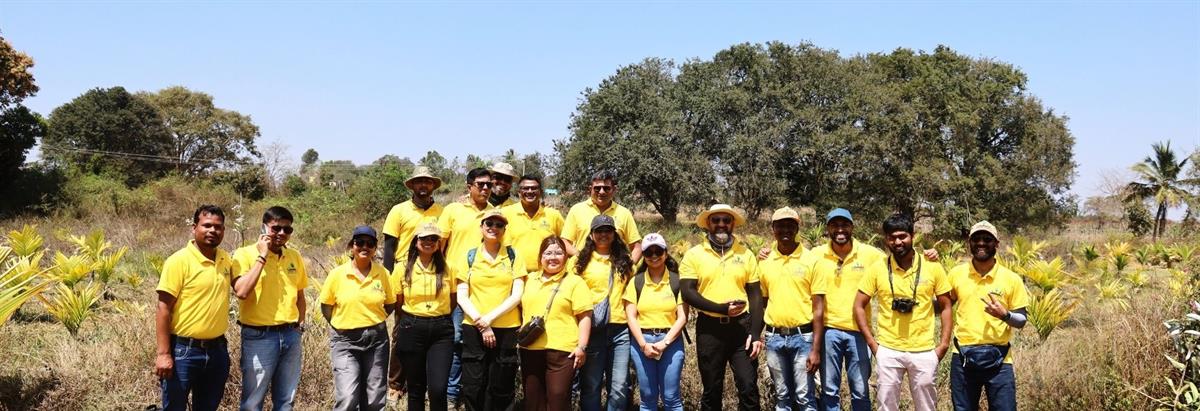
Tree Plantation Programmes today are no longer symbolic events held on World Environment Day. They are structured, data-backed environmental interventions. If you have ever searched for tree planting programs near your area/ surroundings, or considered organizing a tree planting activity program in your school, company, or community, you are already part of a global shift toward restoration.
The question is not whether trees matter. The question is how we plant them responsibly and at a scale.
A tree plantation programme is a planned ecological initiative designed to restore landscapes, strengthen biodiversity, and generate measurable environmental benefits.
It includes site assessment, native species selection, community participation, seasonal planting cycles, and survival monitoring. Unlike casual plantation drives, structured Tree Plantation Programmes are designed for long-term survival and ecological integration.
In India, most credible programs plant local species suited to local agro-climatic conditions. Trees such as neem, mango, teak, and indigenous fruit-bearing varieties are selected because they support soil health, wildlife, and local livelihoods.
If you are exploring a program for tree planting, understanding this structured approach is essential. Planting is only the beginning. Survival is the real metric.
The environmental crisis is no longer abstract. According to the Intergovernmental Panel on Climate Change, global surface temperatures have already risen approximately 1.1C above pre-industrial levels. Forests are under pressure, and biodiversity loss is accelerating.
Tree Plantation Programmes are now part of national and international climate strategies.
When viewed together, these numbers explain why a structured tree planting activity program is no longer optional.
Trees act as natural carbon sinks. According to the United Nations Environment Programme, forests absorb roughly 2.6 billion tonnes of carbon dioxide annually. Through photosynthesis, trees store carbon in their trunks, branches, roots, and soil.
However, carbon benefits depend on survival. That is why professionally managed Tree Plantation Programmes conduct monitoring and audits to ensure saplings establish successfully.
Planting without tracking may look good in photographs. Planting with accountability creates climate impact.
Carbon capture often dominates the conversation. But trees do much more.
A thoughtfully designed program for tree planting influences water cycles, biodiversity, and rural economies.
Trees improve groundwater recharge and reduce surface runoff. According to research published by the World Resources Institute (WRI), reforestation in degraded watersheds can significantly reduce flood risk and improve water retention.
In drought-prone regions of India, this translates into improved agricultural stability.
Habitat fragmentation is one of the primary causes of species decline. Native tree plantations help rebuild ecological corridors.
Trees for Forests™ and Wildlife initiatives support buffer landscapes around reserves such as Jim Corbett National Park in Uttarakhand, improving habitat connectivity.
Trees for Hornbills™ are especially relevant in biodiversity-rich regions like Nagaland, where fruit-bearing indigenous species support nesting cycles.
Trees for Migratory Birds™ help restore wetland ecosystems.
Through structured Tree Plantation Programmes, biodiversity recovery becomes measurable rather than aspirational.
The story of tree planting is not only ecological. It is social.
Local environmental organizations, NGOs, social enterprises, or community groups often manage nurseries and planting operations. According to Indias rural employment data, afforestation initiatives generate seasonal income for rural households and reduce migration pressures.
Fruit-bearing species provide long-term non-timber forest products. Fodder trees support livestock. Fuelwood plantations reduce pressure on natural forests.
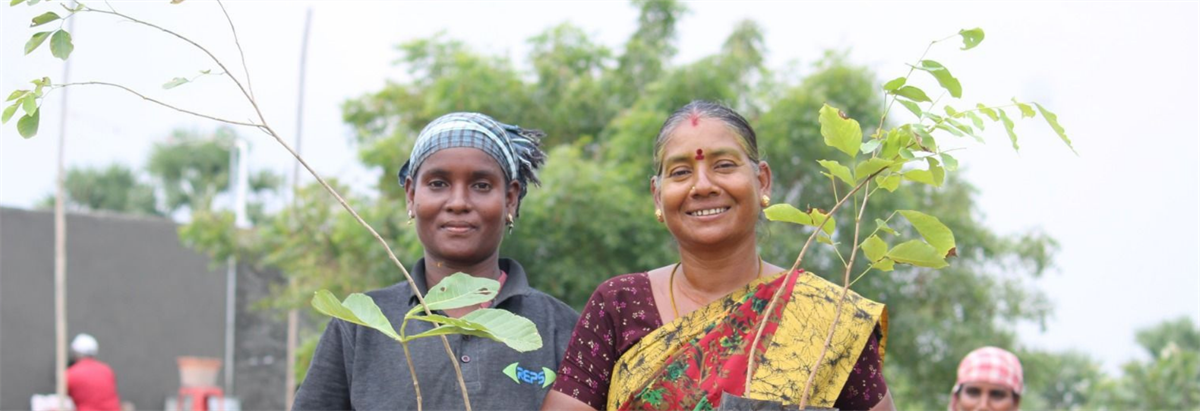
When communities benefit economically, plantations survive. When individuals join Grow-Trees.com projects, they participate not only in carbon reduction but in rural empowerment.
Not all Tree Plantation Programmes are identical. The model depends on geography and purpose.
Reforestation restores degraded forest land.
Afforestation creates forests in areas that were not previously forested.
Both approaches are part of large-scale restoration strategies recommended by global climate frameworks.
Tree Plantation Programmes often fall into focused categories:
Trees for Communities
Trees for Forests™ and Wildlife
Trees+ for The Himalayas
Trees for Tribals®
Miyawaki Forest Projects
Miyawaki forests, developed using high-density local planting techniques, can grow up to ten times faster than conventional methods, according to studies on the Miyawaki model.
If you are searching for tree planting programs near you, understanding the category that aligns with your goals helps create deeper impact.
Behind every sapling is a structured process.
Step 1: Site assessment
Soil quality, rainfall patterns, and land tenure are evaluated.
Step 2: Species selection
Only local species are selected based on agro-climatic conditions and community benefits.
Step 3: Community engagement
Local stakeholders are involved in nursery raising, planting, and maintenance.
Saplings are first nurtured in nurseries. In India, plantation typically occurs during the monsoon season from July to September. The rainfall improves root establishment and reduces early mortality.
This seasonal timing significantly increases survival rates in Tree Plantation Programmes.
Verification builds trust.
Independent audits are often conducted 12 to 18 months after plantation. Third-party auditors physically verify sapling counts, confirm species accuracy, reconcile financial records, and assess mortality rates.
Participants can track plantation locations through project mapping features. For corporate adoption models, assisted site visits may be arranged.
This transparency differentiates structured Tree Plantation Programmes from one-day drives.
Government Initiatives
Indias National Afforestation Programme and Compensatory Afforestation Fund support large-scale plantation.
Corporate Social Responsibility
Under Indias Companies Act, eligible companies allocate CSR funds toward environmental sustainability, including tree planting.
NGOs and Social Enterprises
Specialized organizations design, implement, and monitor plantations, often partnering with local environmental organizations, NGOs, or community groups.
The importance of structured Tree Plantation Programmes is also being reinforced at the policy level in India.
As reported in Business Standard, Union Agriculture Minister Shivraj Singh Chouhan recently called for transforming tree plantation into a nationwide mass movement. Addressing officials at an event marking the completion of five years of his pledge to plant at least one sapling daily, he stressed that:
Climate change has become a major concern worldwide. We need to take steps to tackle the adverse impact of climate change.
He further stated that society as a whole, and every citizen, shares responsibility in protecting mother earth, noting that environmental protection becomes stronger if there are trees.
The minister also urged institutions such as the Indian Council of Agricultural Research (ICAR) to begin official programmes with sapling plantation, reinforcing the idea that structured plantation must move beyond symbolism into institutional practice.
This reflects a broader national shift: tree plantation is no longer treated as ceremonial activity but as a climate adaptation and ecological resilience strategy.
The next generation of Tree Plantation Programmes will likely integrate satellite monitoring, carbon accounting, biodiversity indexing, and digital tracking dashboards.
The focus is shifting from how many trees are planted to how many survive.
Restoration is becoming data-driven.
Planting a memorial tree is not only a tribute to someone we love. It is a commitment to the future.
Whether you organize a tree planting activity program, support a program for tree planting, or explore tree planting programs near you, the choice matters. When done responsibly, Tree Plantation Programmes create environmental, social, and economic returns that extend decades into the future.
A single tree may feel small. When trees are planted at scale, landscapes change.
Q1. How much does it cost to plant one tree?
Costs in Grow-Trees.com typically range between ?85 and ?120 per tree depending on species, geography, and maintenance inclusion.
Q2. What's the difference between planting trees and buying carbon credits?
Planting trees generates direct ecological restoration. Carbon credits are financial certificates representing emission reductions.
Q3. How many trees do I need to offset my carbon footprint?
The number depends on lifestyle and emissions. Estimates vary widely, but individual annual footprints may require dozens to hundreds of trees for partial offset.
Q4. Are urban tree plantation drives effective?
Yes, they are effective when scientifically planned and maintained, especially under dense planting models such as Miyawaki forests.
Q5. What happens if planted trees die?
Mortality is assessed during audits. Replanting policies depend on the organization and project design.
Q6. Can tree planting reverse climate change?
Tree planting alone cannot reverse climate change but is a critical part of broader mitigation strategies.
Q7. How do I choose a trustworthy tree plantation organization?
Look for independent audits, local species selection, survival monitoring, community involvement, and transparent reporting, such as Grow-Trees.com does.
Q9. What are the best tree species for Indian climate?
Species vary by region but commonly include neem, teak, mango, and other indigenous varieties suited to local agro-climatic conditions.
Sources:
Intergovernmental Panel on Climate Change (IPCC) Sixth Assessment Report
Food and Agriculture Organization (FAO), Global Forest Resources Assessment
United Nations Environment Programme (UNEP), Forests and Climate
Intergovernmental Science-Policy Platform on Biodiversity and Ecosystem Services (IPBES) Global Assessment
World Resources Institute (WRI)
Government of India, National Afforestation Programme
India's Rural Employment Data
Business Standard, Chouhan calls for making tree plantation a mass movement
Subscribe to our newsletter and recieve a selection of our cool articles every week.
Copyrights @ 2025 All rights reserved by Pangea EcoNetAssets Pvt Ltd.