Views
20
(A story of water, women, and what responsible CSR can truly change)

On World Water Day, 22nd March 2026, a report highlighted by The Guardian, drawing from findings by UNESCO, brought forward a reality that is both staggering and deeply human.
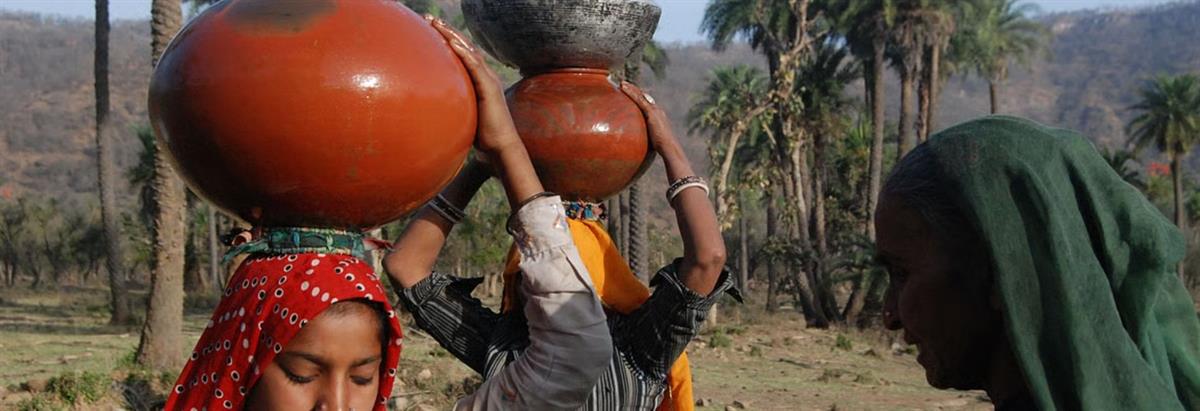
Women and girls collectively spend 250 million hours every single day collecting water.
In more than 70 percent of rural households without access to piped water, it is women who carry this responsibility.
The cost of this time is not abstract.
It is missed education.
It is lost income opportunities.
It is physical strain.
It is exposure to risk.
The same report highlights that even a 1C rise in temperature reduces incomes in female headed households by 34 percent more than others, while increasing their labour burden.
This is not just a water crisis.
It is a crisis of equity, time, and dignity.
Where This Reality Meets the Ground in India

Across regions such as Uttarakhand, Jharkhand, and Rajasthan, this global reality is visible in everyday life.
Rainfall is unpredictable.
Water sources are seasonal or distant.
Groundwater recharge remains limited.
In such conditions, access to water determines whether crops survive, whether livestock can be sustained, and whether children, especially girls, can attend school.
At Grow-Trees.com, tree plantation efforts are closely linked with water conservation.
A sapling cannot survive without water.
A community cannot thrive without it either.
CSR initiatives therefore, focus on creating decentralised, community-owned water structures that support both ecological restoration and human needs..

Under the Trees+ for the Himalayas project in Nainital and Almora, Uttarakhand, implemented in partnership with the Central Himalayan Rural Action Group (CHIRAG) and local Van Panchayats, water conservation has been integrated with afforestation to address region-specific challenges.
The mountainous terrain faces irregular rainfall, rapid surface runoff due to steep slopes, limited groundwater recharge, and seasonal drying of springs. As a result, rural households often depend on distant water sources, increasing the physical burden, especially on women.
To address this, the project has supported the creation of 25 recharge ponds and percolation pits, designed to capture rainwater runoff and enable gradual groundwater replenishment.
These interventions have:
By combining plantation with water conservation, the Trees+ initiative strengthens ecological restoration while quietly reducing the everyday burden carried by rural women.


In Loadih village, East Singhbhum, Jharkhand, under the Pond Creation Project by Aadivasi Welfare Foundation (AWF), water conservation has directly addressed everyday challenges faced by rural communities.
A pond measuring 55 ft x 65 ft x 15 ft, with a water holding capacity of approximately 1,020,604 litres, was constructed to support irrigation, livestock needs, and domestic water access.
This intervention has:
Complementing this, under the Trees+ for Elephants project in Singhbhum, Jharkhand, water conservation has been integrated with ecological restoration. The project includes the enlargement of a traditional water harvesting pond in Laylam village, increasing its capacity to approximately 500,000 litres.
This initiative supports:
By combining tree plantation with water body restoration, these efforts strengthen livelihoods, reduce ecological stress, and bring water closer to those who depend on it the most.


Where Trees and Water Intersect
Tree plantation and water conservation are deeply connected.
Water bodies help improve soil moisture, support sapling survival, and enable long term ecological restoration.
They also create habitats for biodiversity and strengthen the overall health of the ecosystem.
This approach reflects a shift from isolated activities to integrated environmental planning.
A Measured View of Impact
The global water crisis continues to affect us, as described by UNICEF data-
In this context, every local intervention plays a role.
Impact is not only about scale.
It is about relevance, continuity, and equitable access.
Frequently Asked Questions (FAQs)
1. Why is water conservation important for tree plantation?
Water is essential for sapling survival, especially in regions with erratic rainfall. Water conservation structures such as recharge ponds help retain soil moisture, improve groundwater levels, and support long term plantation success.
2. How does water scarcity affect women and girls the most?
According to The Guardian and UNESCO, women and girls are responsible for collecting water in over 70 percent of households without access. This impacts their education, health, safety, and reflects loss of income opportunities for them.
3. What kind of water conservation work is done through CSR initiatives?
CSR initiatives focus on building community water assets such as recharge ponds, khals which are traditional water harvesting structures in hilly regions, rainwater harvesting systems, and other decentralized water bodies. These interventions help improve groundwater recharge, reduce soil erosion, and provide sustainable and locally accessible water sources for both communities and ecosystems
4. How do water conservation projects support local communities?
They provide water for agriculture and livestock, reduce time spent fetching water, create local employment, and improve resilience to climate variability.
5. What is the link between water conservation and climate resilience?
Water conservation helps store rainfall, reduce dependency on unpredictable weather patterns, and maintain ecological balance in drought prone and vulnerable regions.
6. How many people have benefited from Grow-Trees.com water initiatives?
Efforts have contributed to the creation of 71 plus water bodies, over 23 million litres of storage capacity, and have impacted more than 5000 beneficiaries across regions.
7. How can individuals or organisations support such initiatives?
They can support tree plantation programs linked with water conservation, participate in CSR partnerships, and promote awareness around sustainable water use.
Closing Reflection
Somewhere today, a woman will spend hours walking for water.
And somewhere else, because a water body was built, she will not have to.
That difference is where meaningful change begins.
The global water crisis is not just about scarcity, it is about inequality, as highlighted by The Guardian and UNESCO, where women and girls bear the greatest burden. This is where CSR moves beyond infrastructure to become a force for equity. By bringing water closer to communities, these initiatives do not just conserve resources; they reduce the time, effort, and opportunity lost in accessing them. In doing so, CSR begins to quietly bridge the gap between those who carry the burden and those who no longer have to.
Source:
https://www.drishtiias.com/blog/water-crisis-in-india-policy-interventions-and-ground-realities
https://www.downtoearth.org.in/water#:~:text=Updates%20&%20Latest%20news%20on%20water,6%20min%20read
Subscribe to our newsletter and recieve a selection of our cool articles every week.
Copyrights @ 2025 All rights reserved by Pangea EcoNetAssets Pvt Ltd.