
Views
31
Diwali is often described as the festival of lights, but its meaning goes far beyond diyas, decorations, sweets, and celebrations. It represents a new beginning, gratitude, prosperity and the triumph of light over darkness.
In 2026, Diwali falls on 8 November, while the wider festive period traditionally begins with Dhanteras and continues through Bhai Dooj. As India is a diverse country of various religions, rituals and languages, different communities and regions follow their own customs, so there is no single way to celebrate this festival of lights.
Today, as environmental consciousness is growing, people are also looking for ways to celebrate with less waste and pollution while keeping the traditions that make the festival special. From choosing reusable decorations to supporting local artisans to gifting with trees, these small choices can make the celebration more thoughtful.
So, can you celebrate Diwali while keeping its spirit alive while making room for a more conscious way of celebrating? Let’s explore.
Why do we celebrate Diwali?

Diwali, or Deepavali, literally translates to a row of lights. It marks the victory of light over darkness and good over evil, and it's celebrated by hundreds of millions of people across India and the wider diaspora every autumn. The date shifts each year with the lunar calendar, usually falling somewhere between mid-October and mid-November.
What does Diwali symbolise?
The diyas we light during Diwali are more than just decorative elements but they symbolise hope, knowledge, and the victory of light over darkness. Each small flame reflects the festival's deeper meaning, reminding us that even the smallest light can overcome the darkest night. From beautiful Diwali rangoli designs to rows of glowing traditional diyas adorning windowsills, every celebration of this festival of lights carries the timeless message of positivity, wisdom, and new beginnings.
Why do Indians celebrate Diwali?
Most popularly, Diwali marks Lord Rama's return to Ayodhya after fourteen years of exile, with the townspeople lighting rows of diyas to welcome him home after his victory over Ravana. In parts of India, the festival also celebrates Goddess Lakshmi's blessings of wealth and prosperity, which is why Lakshmi Puja is the centrepiece of the main Diwali night. In eastern India, Goddess Kali is worshipped on the same night instead. So when someone asks why Indians celebrate Diwali, the honest answer is that it depends a little on where in India they're from, since the festival has absorbed several regional stories over centuries.
The five days of Diwali 2026: Traditions, Meaning & Ways to Celebrate Consciously
So how do we celebrate Diwali across five days? It's a stretch that runs from Dhanteras to Bhai Dooj, and each day carries its own story, rituals, and mood.
Day 1 - Dhanteras: Clean, renew, and welcome new beginnings
Dhanteras kicks off the festival with a thorough house cleaning, since a clean, well-lit home is meant to welcome Goddess Lakshmi in. It's also traditionally a day for buying gold, silver, or new utensils, seen as an auspicious way to invite prosperity into the household.
On this day, many families light a diya for Lord Dhanvantari, the god of health and medicine, in the evening. Markets are usually packed, with jewellers and utensil shops seeing some of their busiest footfall of the year.
Day 2 - Choti Diwali: Celebrate light while reducing pollution
Also known as Naraka Chaturdashi, this is a quieter day of preparation. Homes get their final touches, smaller diyas are lit, early rangoli patterns go up at the doorstep, and families often visit neighbours or exchange the first round of sweets.
In some regions, this day marks Lord Krishna's victory over the demon Narakasura, and an early oil bath before sunrise is considered symbolic of washing away impurity. It's also a natural point to start lighting diyas rather than crackers, since the quieter mood of Choti Diwali suits candlelight far better than noise.
Day 3 - Diwali & Lakshmi Puja: Celebrate prosperity with purpose
On this main Diwali night, homes are lit with rows of diyas and fairy lights, doorways are decorated with fresh marigold garlands, and Lakshmi Puja is performed in the evening, usually along with prayers to Lord Ganesha.
On this day, families gather for a large festive meal, often with an elaborate spread of sweets like ladoo and various other Indian regional options. In many households, this is also the traditional night for firecrackers, though the scale of that varies from one family to the next. If your household is thinking about scaling that back this year, the puja itself doesn't lose anything for it, a home full of diyas and a shared meal carries the same warmth with or without the noise outside.
Day 4 - Govardhan Puja: Honour nature and give back to the Earth

Govardhan Puja celebrates the story of Lord Krishna lifting the Govardhan hill on his little finger to shelter the villagers of Vrindavan, along with their cattle, from a storm sent by an angry Indra. Devotees traditionally build small hills out of cow dung or food to represent Govardhan, and offer an elaborate meal known as Annakut, literally "a mountain of food," to mark gratitude for a good harvest.
In Gujarat and parts of North India, this day also lines up with the start of the new business year. A simple way to connect this tradition with modern sustainability is to spend part of the day doing something positive for nature, such as caring for plants or reducing household waste.
Day 5 - Bhai Dooj: Celebrate family, connection and giving
Bhai Dooj closes out the festival, celebrating the bond between brothers and sisters. Sisters perform a small aarti for their brothers, apply a tilak on their forehead, and pray for their well-being and long life, while brothers give gifts in return.
It's similar in spirit to Raksha Bandhan, though tied specifically to the Diwali calendar, and a warm way to end the five days. Since gifts are already part of the ritual, it's a nice closing note to pick something with a little more thought behind it. A tree planted in a sibling's name says just as much as anything wrapped in paper, and it keeps growing long after the day is done.
How is Diwali celebrated across India and beyond?
How Diwali is celebrated in India varies quite a bit by region, and that variety is honestly one of the best things about the festival.
How is Diwali celebrated in North India?
North India leans heavily into the Ramayana story, with Lakshmi Puja, elaborate rangoli, and Ramlila performances in the weeks leading up to Diwali. Homes across Delhi, Uttar Pradesh and neighbouring states are strung with lights well before the actual night, and family visits often continue right through the following weekend.
How is Diwali celebrated in South India?
In Tamil Nadu, Karnataka, and Andhra Pradesh, the main celebration often falls a day earlier as Naraka Chaturdashi, marked with an early oil bath before sunrise, new clothes, and family visits rather than one single big puja night. Sweets like murukku and adhirasam tend to feature just as heavily as the puja itself.
How is Diwali celebrated in East India?
Bengal, Odisha, and Assam celebrate Kali Puja on Diwali night, worshipping Goddess Kali instead of, or sometimes alongside, Lakshmi. The pandals, idols, and night-long prayers give East India's Diwali a distinct character of its own, closer in energy to Durga Puja than to the Lakshmi-focused celebrations further north.
How is Diwali Celebrated in West India?
Gujarat and Maharashtra treat Diwali almost like the start of a new financial year, with businesses traditionally closing their old account books and opening fresh ones on Chopda Pujan, timed right around Lakshmi Puja. Homes in Mumbai and Ahmedabad are known for particularly elaborate rangoli, sometimes spanning the entire entrance.
How do Sikhs celebrate Diwali and Bandi Chhor Divas?
Sikhs celebrate Bandi Chhor Divas on the same day as Diwali, marking Guru Hargobind Ji's release from imprisonment at Gwalior Fort, along with 52 princes he insisted on freeing too. The Golden Temple in Amritsar is lit with thousands of diyas for the occasion, one of the most striking sights of the entire festival season, drawing visitors well beyond the Sikh community.
How do Jains celebrate Diwali?
For Jains, Diwali marks the anniversary of Lord Mahavira attaining moksha, or spiritual liberation, at Pawapuri. Temples hold special prayers, and many Jain families use the day for reflection, fasting, and charity rather than loud, large-scale celebration, with some observing a period of quiet meditation right through the night.
How to celebrate Diwali away from home?
Living outside India doesn't have to mean skipping the festival altogether. A diya on the windowsill, a home-cooked meal, a video call with family back home, and reaching out to other Indian families nearby for a shared celebration can make Diwali feel real even thousands of kilometres away. Some cities with large Indian communities such as in London, Singapore, and Toronto now hold public Diwali events too which makes it easier to find that same shared warmth even far from home.
How to celebrate Diwali at home in a more meaningful way ?
Plenty of families quietly prefer to celebrate Diwali at home simply because the big, loud version isn't for everyone, and honestly, that's completely fine.
How to prepare your home for Diwali?
Start with a proper clean-up, then add diyas, fairy lights, fresh flowers, and a simple rangoli at the entrance. None of this requires buying anything new. A home with clean, warm lighting and a few fresh flowers already feels festive before a single decoration goes up.
How to celebrate Diwali with your family?
Cook together instead of ordering everything in. Light diyas as a shared activity instead of leaving it to one person to finish before everyone else arrives. Sit down for at least one proper meal without phones on the table. These sound like small things, but they're usually the part people remember years later, not the fireworks or the shopping, especially for kids who tend to hold onto the small rituals far longer than their elders.
How to celebrate an eco-friendly Diwali in 2026 ?

Celebrating an eco-friendly Diwali in 2026 is all about making thoughtful choices that bring joy to the festivities while being kinder to the environment. From choosing sustainable decorations to reducing pollution and embracing greener gifting ideas, small changes can make a meaningful difference without taking away from the spirit and traditions of Diwali.
How to celebrate Diwali without crackers?
Swap crackers from diyas, string lights, sparkler-free rangoli, and music instead. Some housing societies now organise one shared, quieter celebration for residents instead of individual bursting, which cuts down noise for pets, infants, and elderly neighbours.
How to celebrate Diwali without pollution?
Delhi's air quality regularly spikes into "severe" territory within hours of sunset on Diwali night, according to monitoring data published by India's Central Pollution Control Board in recent years. Choosing diyas over crackers, carpooling to gatherings, and skipping synthetic smoke-based decorations are some small-small changes that tend to make the bigger difference.
How can you begin celebrating an eco-friendly Diwali?
Making your Diwali celebrations more sustainable doesn't have to mean changing everything at once. Start with a few simple swaps in your everyday festive choices. Small, mindful changes can help reduce waste, minimise pollution, and make your Diwali celebrations more eco-friendly while keeping the festive spirit alive.
How to Make Your Diwali Celebrations Greener and Waste-Free?
Make your Diwali celebrations eco-friendly by choosing natural decorations and reducing unnecessary waste. Replace plastic and glitter with clay diyas, terracotta décor, cloth hangings, marigold garlands, and rangoli made from rice flour or flower petals. You can also reuse decorations from previous years, opt for sweets in reusable packaging, and compost leftover flowers and food waste. Shopping from local markets and making mindful choices can help you celebrate a beautiful Diwali while reducing your environmental footprint.
Beyond the festivities: Meaningful ways to celebrate Diwali
Support local artisans and sustainable businesses
Buying diyas, rangoli colours, and decor from local potters and small businesses keeps traditional crafts alive and puts money directly into the hands of the people actually making these items, rather than into mass factory production. It's also often the easiest way to find genuinely handmade pieces, the kind with small imperfections that machine-made decor never quite has.
Share festive joy with those around you
Send sweets or a small gift to your building's security staff, domestic help, or a neighbour who might be spending Diwali alone this year. It costs very little in time or money, and it genuinely changes someone's festival.
Give back to your community
Many families now use Diwali as an occasion to donate, whether that's clothes, books, or funds to a cause they care about. Planting a tree through an organisation like Grow-Trees.com is one straightforward way to give back, since each sapling supports both the local environment and, often, the rural livelihoods tied to plantation drives across India.
Diwali Gift Guide 2026: Thoughtful, Sustainable & Unique Gift Ideas
Unique Diwali gifts that leave a lasting impression
Handmade diyas, a home-cooked sweet box, a subscription to something the person actually uses, or a tree gifted in their name all tend to stand out more than another candle set. What matters most is that it feels chosen for that specific person rather than picked off a shelf in a hurry.
Thoughtful and eco-friendly Diwali gifts for loved ones
Choosing a Diwali gift doesn't have to be complicated. Sometimes, a box of homemade sweets, a set of handmade diyas, khadi décor, or a reusable gift hamper can make someone feel truly special. You could even plan a meal together or pick something that reflects their interests. The idea is to give something thoughtful that brings a smile without adding to unnecessary waste.
Sustainable Diwali corporate gifting ideas
Companies are gradually moving away from the standard mithai box toward gifts with a slightly longer story. You can choose sustainable hampers, locally sourced products, reusable office items, or gifts that support environmental and social initiatives such as tree-planting CSR initiatives with Grow-Trees. It's also an easy way for a company to point to something tangible when talking about its own sustainability efforts, rather than a vague line in an annual report.
Why is a tree a meaningful Diwali gift?
A tree keeps growing long after Diwali itself is over. It supports air quality and ecosystems, and in many plantation programmes it also helps fund the rural and tribal communities paid to plant and maintain it. Very few gifts manage to do that much with that little.
How can you gift a tree in someone's name this Diwali?

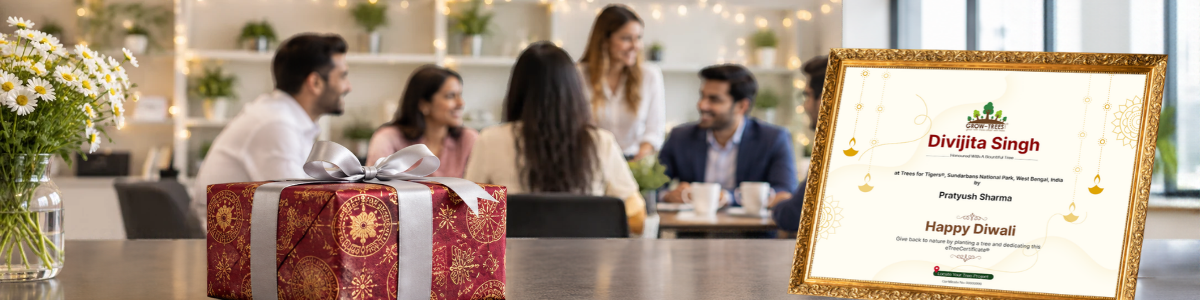
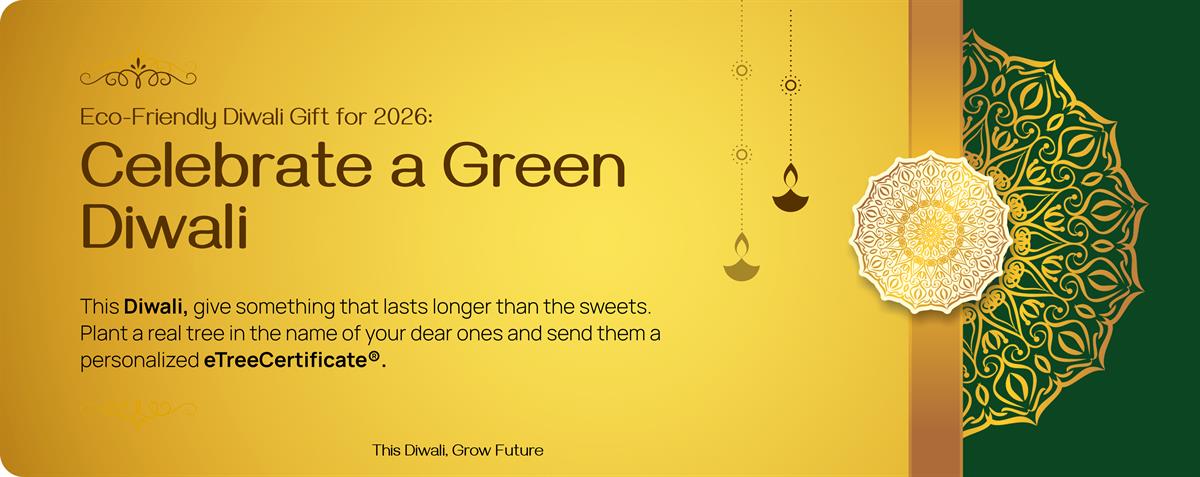
Through Grow-Trees.com, you can plant a tree in a friend's or family member's name in just a few clicks. They receive a certificate confirming the plantation and, over time, updates on how the tree is growing, so the gift genuinely continues well beyond the festival itself.
How to celebrate a safe and responsible Diwali
Diwali decoration and lighting safety
Keep diyas away from curtains, furniture and other flammable materials, and avoid leaving them burning unattended. Before switching on decorative lights, check for damaged wires or loose connections. Keeping a bucket of water or sand nearby is also a good precaution.
Keeping children and pets safe during Diwali
Diwali celebrations can sometimes be overwhelming for young children and pets, especially because of loud firecrackers. Try to keep pets indoors during peak cracker hours, with windows and curtains closed to reduce noise. Children should also be supervised around diyas, candles and sparklers to prevent accidental burns or injuries.
Practising responsible Diwali celebrations
Celebrating responsibly also means being considerate of the people and surroundings around us. Follow local guidelines on firecrackers and noise levels, avoid creating unnecessary disturbances for elderly neighbours and those sensitive to smoke, and make sure festive waste is disposed of properly. A little care and consideration can help everyone enjoy a safer and more pleasant Diwali.
Your 2026 Checklist for a More Conscious Diwali
Celebrate with less, but make it meaningful
Focus on the traditions you enjoy most, spend time with loved ones and make room for simple celebrations that bring everyone together.
Make greener choices wherever possible
Choose clay diyas instead of excessive decorative lighting, reusable decorations over plastic and thoughtful gifts over unnecessary packaging. Even a few small changes in the way you celebrate can help reduce waste and pollution.
Choose Decorations and Gifts That Last
Bring home handmade clay décor, fresh flowers and reusable decorations that you can enjoy year after year. When it comes to gifting, look beyond things that are used once and forgotten like a tree, tend to hold up better than anything designed to be thrown out by the next morning.
Spend time with people who matter
At the end of it, this is usually the part nobody forgets: who you actually sat with, not what was on the table or how many crackers went off outside. Most people, looking back on a Diwali years later, remember the conversations far more clearly than the decorations.
Gift a tree that keeps growing

A tree planted through Grow-Trees.com doesn't wilt, break, or end up at the back of a cupboard by January. It grows, quite literally, into something bigger than the moment it was given, long after the diyas have burned out and the decorations have come down. If you’re ready to send one, you can gift a tree this Diwali and the certificate reaches them instantly.
Whether it's one tree for a family member or a bulk order for an office, Grow-Trees.com makes it simple to answer how we celebrate Diwali this year with something that plants actual roots, rather than one more item to unwrap.
FAQs about celebrating Diwali
How do we celebrate Diwali in India?
With five days of rituals, from Dhanteras through Bhai Dooj, including diyas, rangoli, Lakshmi Puja, family meals, and gift exchanges, with regional variations across North, South, East, and West India.
How do we celebrate Diwali at home?
By cleaning and decorating the house, lighting diyas, cooking a festive meal together, and performing a simple Lakshmi Puja as a family.
What are the main ways to celebrate Diwali?
Lighting diyas, decorating with rangoli and flowers, performing Lakshmi Puja, sharing sweets, and exchanging gifts with family and friends.
How can we celebrate Diwali without firecrackers?
Use diyas, string lights, music, and rangoli instead, and consider one shared, quieter celebration with neighbours rather than individual bursting through the evening.
How can we celebrate a Green Diwali?
Choose clay diyas over plastic decor, skip crackers where possible, pick sustainable gifts like a tree from Grow-Trees.com, and cut back on food and packaging waste across the five days.
How can we celebrate Diwali with family?
Cook and decorate together, keep at least one meal phone-free, and involve everyone, including kids, in the diya-lighting and puja rather than leaving it to one or two people.
What are some different ways to celebrate diwali?
From a traditional five-day celebration with full rituals to a quiet eco-friendly evening with diyas and a home-cooked meal, or even marking the festival from abroad with a video call and a small donation back home.
How can we celebrate Diwali this year?
By keeping the traditions that matter most to your family, cutting back on unnecessary crackers and waste, and choosing gifts, like a tree planted in someone's name, that actually last beyond the festival itself.

Plant Monthly, Greet Anytime
A monthly tree-planting plan that lets you keep trees ready to greet and celebrate your loved ones anytime.
Start Monthly PlantingSubscribe to our newsletter and recieve a selection of our cool articles every week.