

Views
20
Every year on 16th September, the world pauses to celebrate one of its quietest but most powerful success stories the healing of the Ozone Layer. At Grow-Trees.com, we believe every environmental milestone, big or small, deserves to be understood, celebrated, and acted upon. This year, as we mark World Ozone Day 2026, it's the perfect moment to understand why this day matters so much, what's changed over the decades, and what each of us can still do to protect the invisible shield that keeps life on Earth possible.
Whether you're a student researching for a project, a teacher planning classroom activities, or simply curious about what Ozone Day is really about, this guide covers the history, the science, the 2026 theme, and simple actions you can take starting today.
About World Ozone Day

What Is World Ozone Day?
World Ozone Day, also known as Ozone Day, is a global observance dedicated to raising awareness about the ozone layer and the importance of protecting it. Officially called the International Day for the Preservation of the Ozone Layer, it reminds governments, industries, and everyday people that the ozone layer the thin gaseous shield high in our stratosphere, needs continued protection from harmful chemicals.
Think of Ozone Layer Day as an annual environmental check-in: a day to look back at how far we've come, and to look ahead at the work still left to do.
When Is World Ozone Day Celebrated?
World Ozone Day is celebrated every year on 16th September. This date isn't random it marks the anniversary of the signing of the Montreal Protocol on 16th September 1987, the landmark International Treaty that set the wheels in motion to phase out ozone-depleting substances worldwide.
Why Is World Ozone Layer Day celebrated?
Ozone Day is celebrated to spread awareness about ozone layer depletion, celebrate the global cooperation that's helped it recover, and encourage continued action against substances that harm it. It's also a chance to connect ozone protection with climate change many of the same chemicals that damage the ozone layer are also powerful greenhouse gases.
World Ozone Day 2026 Theme

What Is the World Ozone Day 2026 theme?
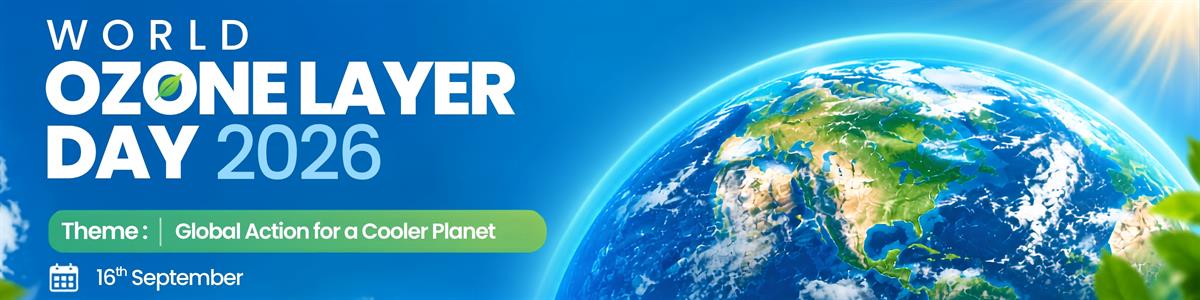
The theme for World Ozone Day 2026 is Global Action for a Cooler Planet. This year's theme also marks a special milestone ten years of sustainable cooling under the Kigali Amendment to the Montreal Protocol, one of the most important updates to the treaty in its history.
What does the Ozone Day 2026 theme mean?
The Ozone Day 2026 theme celebrates how the Montreal Protocol and its Kigali Amendment have proven that science-based policy, strong global participation, and steady financing can genuinely fix an environmental crisis. It's a reminder that when countries work together, even the toughest environmental problems can be solved.
The theme also emphasizes sustainable cooling as more people worldwide use air conditioners and refrigerators, cooling technology shouldn't come at the cost of a warmer planet.
World Ozone Day themes by Year (2015–2026)
The United Nations gives the International Day for the Preservation of the Ozone Layer a different theme each year to highlight a key issue, milestone or achievement in ozone protection. Looking at the themes over time shows how the global focus has evolved from ozone-layer recovery to climate action and sustainable cooling.
Key takeaway:
The themes have evolved from celebrating ozone-layer protection and recovery to emphasising its wider links with climate action, sustainable cooling, health, food security and global environmental cooperation.
History of World Ozone Day

How did World Ozone Day begin?
The story of World Ozone Day starts in the 1980s, when scientists discovered a rapidly growing hole in the ozone layer over Antarctica. This alarming discovery pushed the world into action, leading to the international agreements that eventually gave us the Ozone Day we observe today. On 19th December 1994, the United Nations General Assembly officially declared 16th September as the International Day for the Preservation of the Ozone Layer.
The Vienna Convention for the Protection of the Ozone Layer
Before the Montreal Protocol, there was the Vienna Convention, signed in 1985. This was the first global agreement to acknowledge that ozone depletion was a serious problem needing coordinated international research and action. It laid the legal and scientific groundwork that made the Montreal Protocol possible just two years later.
The Montreal Protocol
Signed on 16th September 1987, the Montreal Protocol is widely considered one of the most successful environmental treaties ever created. It sets out clear timelines for countries to phase out ozone-depleting substances like chlorofluorocarbons (CFCs) and halons. Remarkably, it's the only UN treaty to have achieved universal ratification every country in the world is part of it.
The Kigali Amendment
In 2016, the Kigali Amendment was added to the Montreal Protocol, shifting focus to hydrofluorocarbons (HFCs). While HFCs don't harm the ozone layer directly, they're extremely potent greenhouse gases. The Kigali Amendment commits countries to gradually phasing down HFC use, connecting the story of Ozone Day directly to the fight against climate change.
From Scientific Discovery to Global Action
From a worrying scientific discovery to one of the biggest environmental success stories in history that's the real arc of World Ozone Day. It shows how science, paired with genuine global cooperation, can reverse serious environmental damage.
What is the Ozone Layer and Why is it important?
What Is the Ozone Layer?
The ozone layer is a region in Earth's stratosphere, roughly 15 to 35 kilometres above the surface, made up of a gas called ozone (O3). Thin and delicate as it is, it plays an enormous role in making life on Earth possible.
How does the Ozone Layer protect Earth?
The ozone layer works like a natural sunscreen for the entire planet. It absorbs most of the sun's harmful ultraviolet (UV-B and UV-C) radiation before it can reach the Earth's surface. Without this shield, the intensity of UV radiation reaching us would be dangerously high.
Ozone Layer, UV Radiation and Human Health
A healthy ozone layer directly protects human health. Excess UV exposure is linked to:
- Higher risk of skin cancer
- Cataracts and other eye damage
- Weakened immune system response
- Premature skin ageing
This is one of the biggest reasons Ozone Layer Day matters so much, it's directly tied to public health, not just abstract environmental science.
Ozone Layer and Climate
The ozone layer and climate change are deeply connected. Many ozone-depleting substances are also greenhouse gases, so reducing them helps slow down global warming too. This is exactly why recent Ozone Day themes, including this year's, blend ozone protection with climate action.
Ozone Layer and the Environment
Beyond human health, the ozone layer protects entire ecosystems. Excessive UV radiation can damage plant growth, reduce crop yields, harm marine phytoplankton - a foundation of the ocean food chain and disrupt ecosystems that countless species depend upon.
What causes Ozone Layer depletion?
Ozone-Depleting Substances (ODS)
Ozone depletion is caused mainly by man-made chemicals known as ozone-depleting substances, or ODS. The most well-known of these are:
- Chlorofluorocarbons (CFCs)
- Hydrochlorofluorocarbons (HCFCs)
- Halons
- Methyl bromide
Common Uses of Ozone-Depleting substances
These substances were once widely used in everyday products and industries, including:
- Refrigerators and air conditioners
- Aerosol sprays
- Foam insulation and packaging
- Fire extinguishers
- Certain agricultural pesticides
How Ozone-Depleting Substances (ODS) damage the Ozone Layer
When ODS chemicals are released into the atmosphere, they slowly drift up into the stratosphere. There, sunlight breaks them down, releasing chlorine and bromine atoms that destroy ozone molecules a single chlorine atom can destroy thousands of ozone molecules before it becomes inactive, which is why even small amounts of these chemicals cause outsized damage.
Effects of Ozone Depletion on Health, Food and Ecosystems
Ozone depletion doesn't stay contained to the sky its effects ripple down to the ground, affecting human health, agricultural productivity, forests, and aquatic life, particularly the tiny organisms that form the base of marine food chains.
Global Efforts to Protect the Ozone Layer

How the Montreal Protocol Protects the Ozone Layer
The Montreal Protocol works by setting binding targets and timelines for countries to reduce and eventually eliminate the production and consumption of ozone-depleting substances. It's regularly reviewed and updated based on the latest scientific findings, which is part of why it's remained so effective for decades.
Implementation and Global Ratification
What sets the Montreal Protocol apart from most international agreements is its universal ratification every country on Earth has signed on. This near-total global buy-in is a big reason why World Ozone Day is often held up as a model for how environmental diplomacy should work.
How the Kigali Amendment Supports Sustainable Cooling
The Kigali Amendment supports what's known as sustainable cooling meeting the world's growing demand for refrigeration and air conditioning without relying on climate-warming HFCs. It encourages a shift toward energy-efficient, low-impact cooling technologies, which ties directly into this year's Ozone Day 2026 theme.
Global Progress in Ozone Layer Recovery
Scientific assessments show the ozone layer is on a genuine path to recovery, with parts expected to return to 1980 levels by around the middle of this century. It's one of the clearest, most measurable wins in environmental history exactly what World Ozone Day celebrates each year.
India and Ozone Layer Protection
India's commitments under the Montreal Protocol
India has been a committed partner in global ozone protection efforts, ratifying the Vienna Convention and the Montreal Protocol in the early 1990s. Since then, the country has steadily worked through the phase-out schedules for various ozone-depleting substances.
India's achievements in phasing-out Ozone-depleting substances
India has made significant progress in phasing out CFCs, halons, and other ozone-depleting chemicals across industries such as refrigeration, foam manufacturing, and fire safety, often ahead of international deadlines through structured phase-out management plans.
India's initiatives for Ozone Layer Protection and Sustainable Cooling
India has launched its own Cooling Action Plan to address rising cooling demand sustainably, focusing on reducing refrigerant demand, improving energy efficiency, and training technicians in safer servicing practices reflecting the same spirit that World Ozone Day promotes globally.
How can we protect the Ozone Layer?
What can Governments and Industries do?
Governments and industries play the biggest role in ozone layer protection:
- Enforcing strict regulations on ozone-depleting substances
- Investing in research for safer refrigerant alternatives
- Supporting industries transitioning to eco-friendly cooling technology
- Strengthening recycling and disposal systems for old appliances
What can individuals do to protect the Ozone Layer?
You don't need to be a scientist to make a difference. Simple, everyday actions add up:
- Get old air conditioners and refrigerators serviced by certified professionals so refrigerants don't leak into the atmosphere
- Avoid products with aerosol propellants where eco-friendly alternatives exist
- Dispose of old appliances responsibly instead of dumping them
- Spread awareness about Ozone Day among friends, family, and colleagues
- Support environmental causes and organisations working on climate action
And here's one action that's simple and genuinely impactful planting trees. At Grow-Trees, we make it easy for anyone, anywhere, to plant a tree in India with just a few clicks, contributing to cleaner air and a more resilient planet.
Choosing Ozone-Friendly and Energy-Efficient Cooling Solutions
When buying new appliances, look for cooling systems that use ozone-friendly and low-global-warming-potential refrigerants, and check for energy efficiency ratings. Small, informed choices at the individual level genuinely contribute to the bigger goals that World Ozone Day stands for.
Celebrate World Ozone Day with Grow-Trees

How Grow-Trees supports Environmental Action
Grow-Trees has spent years enabling people, families, and organisations across the world to plant trees in India and overseas, supporting reforestation, biodiversity, and rural livelihoods. Our projects are carried out with local communities to restore degraded land and build greener future values that align closely with the spirit of World Ozone Day.
Ways to contribute to a Greener Planet on World Ozone Day
This Ozone Day, here are a few ways to get involved with Grow-Trees:
- Plant a tree in your own name to mark the occasion
- Gift trees to friends and family as a unique, eco-conscious present
- Plant trees on behalf of your company as part of a CSR or sustainability initiative
- Dedicate a tree to a loved one, an event, or a special memory
- Encourage your school, college, or workplace to organise a group tree-planting drive
Every tree planted through Grow-Trees helps restore ecosystems and contributes to the same long-term thinking that has helped the ozone layer heal proof that consistent, collective action works.
World Ozone Day FAQs
What Is an Ozone Day?
Ozone Day, observed every 16th September, is a global day dedicated to raising awareness about the ozone layer and celebrating international efforts to protect it.
What is the Theme for World Ozone Day in 2026?
The theme for World Ozone Day 2026 is Global Action for a Cooler Planet, marking ten years of the Kigali Amendment.
Why is 16th September celebrated as Ozone Day?
16th September is celebrated as Ozone Day because it marks the anniversary of the signing of the Montreal Protocol in 1987.
What is the importance of September 16th?
September 16th is important because it represents global unity in tackling ozone depletion, a rare example of nearly every country coming together to solve an environmental problem.
What is the full name of World Ozone Day?
The full, official name is the International Day for the Preservation of the Ozone Layer.
What is Ozone and what is its importance?
Ozone is a gas made up of three oxygen atoms (O3) that forms a protective layer in the stratosphere, shielding life on Earth from harmful UV radiation.
Is O3 harmful to humans?
Ground-level ozone can be harmful and is a pollutant, but stratospheric ozone (the ozone layer) is essential and protective, not harmful.
How Does Ozone Protect the Earth?
The ozone layer absorbs most of the sun's harmful ultraviolet radiation, preventing it from reaching the Earth's surface in dangerous amounts.
What are 10 reasons why the Ozone Layer is important?
Ozone Layer is important on account of the following i.) protects skin and eyes, ii.) prevents immune suppression, iii.) supports crop health, iv.) protects marine ecosystems, v.) prevents plant damage, vi.) supports biodiversity, vii.) regulates climate, viii.) safeguards forests, ix.) protects aquatic food chains, and x.) helps maintain Earth's overall climate balance.
What are 10 Ways to protect the Ozone Layer?
The following are the 10 ways to protect Ozone Layer: i.) Avoid ozone-depleting products, ii.) Service appliances responsibly and in a timely manner, iii.) Choose energy-efficient cooling, iv.) Support clean technology, v.) Cut vehicle emissions, vi.) Recycle electronics properly, vii.) Spread awareness, viii.) Support environmental policies, ix.) Back reforestation efforts as being carried out by organizations like Grow-Trees, and x.) Make sustainable everyday choices.
How can you explain the Ozone Layer to a child?
You can tell a child that the ozone layer is like the Earth's sunscreen, high up in the sky, protecting everyone from the sun's harshest rays.
What activities can students do on Ozone Day?
Students can organise poster-making competitions, quizzes, tree-planting drives, awareness rallies, and classroom discussions about the ozone layer and the Montreal Protocol.
Subscribe to our newsletter and recieve a selection of our cool articles every week.