Project Target
63% Remaining

93,000
Trees Planted out of 250,000 Trees
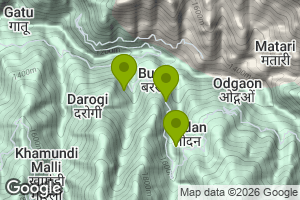
Project Location:
In FY 2026-27, we will plant 250,000 trees in this project. It will be implemented in Burshi and Lodan villages, located in the Naugaun Block of Barkot Tehsil, Uttarkashi district, Uttarakhand, India.
Adoption Summary
| Name of the Company | Number of Trees Adopted | Fiscal Year |
|---|---|---|
| Arbor Day Foundation | 5,000 | 26-27 |
| NVIDIA Graphics Private Limited | 88,000 | 26-27 |
Project Aim

Enhancement of
Biodiversity

Carbon Sequestration

Promotion of
Ecotourism

Groundwater
Recharge

Reduction in
Air Pollution

Generation of
Rural Employment
SDG






Why Trees?
The Himalayan region of Uttarkashi, including Barkot and its surrounding areas, was once known for its pristine mountain ecosystems. Today, however, the region is increasingly experiencing the impacts of climate change. Despite being located at an altitude of approximately 1,220 metres, Uttarkashi is facing water scarcity, declining green cover, and rising temperatures.
According to the Intergovernmental Panel on Climate Change (IPCC), mountain regions are experiencing:
These changes are disrupting ecological balance while affecting both natural ecosystems and local livelihoods.[1]
Over the past two decades, forest degradation in Uttarkashi has intensified due to recurring forest fires and other environmental pressures, leading to significant loss of tree cover.[2]
Changing rainfall patterns, characterised by short but intense bursts of rainfall, have also increased the frequency of landslides, soil erosion and slope instability. Deforestation, combined with heavy rainfall, further increases disaster risks across the fragile Himalayan landscape.
Tree plantation offers a practical and nature-based solution to these challenges. Trees help to:
These ecological services play an important role in strengthening the resilience of mountain ecosystems.[3]
The Himalayan region is exceptionally rich in biodiversity but remains economically vulnerable. Studies indicate that: [4]
The project area lies along the Yamuna Ghati pilgrimage corridor, which attracts thousands of visitors during the annual Yatra season. Eco-tourism also promotes environmental conservation while creating sustainable income opportunities for local communities.[5]
Despite increasing environmental pressures, Uttarkashi continues to support remarkable biodiversity, including Leopard, Black Bear, Brown Bear, Bharal (Blue Sheep), Himalayan Serow, Himalayan Monal and Several native bird species[6]
Given these interconnected environmental and socio-economic challenges, the Trees for the Himalayas® project aims to:
Tree Species
The project focuses on planting native and multipurpose tree species that improve ecological stability while supporting sustainable livelihoods in the Himalayan region.
Himalayan Oak is a vital native species of the Himalayan ecosystem and plays an important role in maintaining mountain forests. Its extensive root system helps stabilise slopes, reduce soil erosion and improve water infiltration.
It is particularly important for:
Himalayan Oak also contributes to watershed protection and the restoration of degraded forest landscapes.
Deodar is a characteristic tree of the Western Himalayas with significant ecological, cultural and economic value. Its strong root system helps stabilize mountain slopes, while its dense canopy provides habitat for a variety of species.
It is valued for:
Deodar contributes to long-term forest development while strengthening the ecological integrity of Himalayan landscapes.
Banj Oak is an important broad-leaved Himalayan species that supports soil and water conservation. Its roots help bind mountain soils and reduce erosion, while its canopy helps retain moisture and provides resources for local biodiversity.
The species is particularly important for:
Banj Oak contributes to the restoration of native Himalayan forests and supports the ecological functions of mountain landscapes.
Wild Apricot is a valuable fruit-bearing species that contributes to both biodiversity conservation and local livelihood opportunities. Its fruits provide food for birds and other wildlife, while the species adds diversity to Himalayan forest ecosystems.
It provides opportunities for:
Wild Apricot therefore combines ecological value with potential nutritional and economic benefits for local communities.
Kachnar is a native flowering tree that enhances vegetation diversity and provides important ecological resources for pollinators and other insects. Its flowers and foliage support local fauna while contributing to landscape restoration.
It is particularly valuable for:
Kachnar adds floral diversity to restored areas while strengthening the ecological value of Himalayan plantations.
Wild Pear is an important Himalayan tree that supports biodiversity through its fruits, flowers and foliage. It contributes to vegetation recovery while providing food and habitat resources for birds and other wildlife.
The species supports:
Wild Pear strengthens the diversity of restored Himalayan forests while supporting the ecological functions of the landscape.
Smooth Bark Ash is a native Himalayan species associated with mountain forest ecosystems. Its root system contributes to soil stabilisation, while its canopy provides habitat and ecological resources for local fauna.
It is important for:
Its inclusion in plantation activities helps diversify restored forests and strengthen the ecological resilience of Himalayan landscapes.
Walnut is an ecologically and economically valuable Himalayan tree that supports both ecosystem restoration and local livelihoods. Its strong root system helps stabilize soil, while its canopy provides habitat for wildlife.
It is valued for:
Walnut provides long-term economic value to local communities while contributing to the restoration and diversification of Himalayan forests.
Silver Oak is a fast-growing species that can contribute to increasing vegetation cover and supporting soil conservation. Its adaptability and rapid growth make it suitable for diversified plantation and agroforestry systems.
It is valued for:
Silver Oak can complement local land-use systems while contributing to increased green cover and additional livelihood opportunities.
The Trees for the Himalayas® project delivers significant social benefits for communities in Bursi and Lodan villages, where environmental degradation is increasingly affecting livelihoods.
Local communities are facing challenges such as:
The project creates employment opportunities through activities including:
These activities provide supplementary income while strengthening local skills in sustainable land management and ecological restoration. The project also promotes inclusive participation by encouraging the active involvement of women, youth and local communities
By restoring degraded landscapes with native and multipurpose tree species, the initiative strengthens people's connection with natural resources while promoting long-term environmental stewardship.
Trees will further improve local living conditions by:
Improved access to natural resources and enhanced livelihood opportunities will strengthen food security while building more resilient rural communities.
Forest degradation across the Himalayan region has increased vulnerability to soil erosion, landslides, and declining agricultural productivity.
Through the plantation of native and suitable species, the project will help restore:
Improved vegetation cover will also support pollinators and native wildlife, strengthening ecosystem functions that are essential for sustainable agriculture.
The selected tree species will improve agricultural productivity by enhancing:
These improvements will strengthen nearby farmlands, increase productivity, and promote long-term agricultural sustainability.
The project aims to strengthen rural livelihoods by reducing dependence on uncertain income sources such as seasonal agriculture and wage labour.
The plantation of multipurpose species including Bamboo, Banj Oak, Pear, Silver Oak, Deodar will generate long-term economic opportunities through:
Fruit-bearing species such as pear will generate direct income through local market sales, while bamboo and Silver Oak will support small-scale enterprises including handicrafts and rural industries.
The project's strategic location along the Yamuna Ghati pilgrimage corridor also creates opportunities to strengthen eco-tourism by supporting:
In the long term, the initiative aims to build economically resilient communities by creating sustainable livelihood opportunities while restoring the ecological balance of the Himalayan region.
[1] https://www.ipcc.ch/report/ar6/wg2/chapter/ccp5/
[2] https://openenvironmentalresearchjournal.com/VOLUME/11/PAGE/38/FULLTEXT/
[3]https://www.researchgate.net/publication/386880737_The_Role_of_Forests_in_mitigating_the_Natural_Disasters
[4] https://jsdconline.com/journal/jsdc/index.php/home/article/view/55/28
[5] https://eelet.org.uk/index.php/journal/article/download/998/871
[6] https://www.sciepub.com/portal/downloads?doi=10.12691/aees-4-2-1&filename=aees-4-2-1.pdf
Social Impact of Growing Trees
Community Engagement
Tree planting initiatives often involve local communities, which can lead to greater community cohesion.
Ecological Education
Provides opportunities for community members, especially children, about the importance of environmental sustainability.
Urban Beautification
Trees contribute to the aesthetic enhancement of urban areas, making cities more pleasant and liveable.
Climate Resilience
By improving green cover, tree planting helps make communities more resilient against climate impacts like heatwaves.
Employment Creation
Planting trees creates employment for local community members like planting and maintenance, administrative roles, and more long-term jobs in management.
Wildlife Habitat
Trees provide critical habitats for various species of wildlife. Enhancing tree cover helps preserve biodiversity, which can be an ecological boon for local communities
Copyrights @ 2025 All rights reserved by Pangea EcoNetAssets Pvt Ltd.